Is the AI built into my software enough, or do I need custom development?
Equipo Tecnea
Tecnea
Almost every program a company uses (the ERP, the CRM, the invoicing software, the office suite) already comes with an AI assistant, or will in its next version. Before commissioning a development, the logical question is whether that is enough.
The short answer: the AI in your software is enough when the task starts and ends inside that software and is done the same way in any company. You need custom development when the process runs through several systems, when it depends on documents that arrive from outside or on rules only your company has, or when what the vendor charges for usage stops paying off.
What the AI built into your software does well
AI built into business software performs well on what happens inside that software:
- Summarising and searching its own data: a customer's history, a supplier's outstanding invoices, this week's incidents.
- Drafting with what the software already knows: a reply to a customer, a product description, a report with its own figures.
- Helping people use the software: where an option is, how to run a report, what a field means.
It has three advantages that are hard to match. It works from day one, with no project. The vendor maintains it and improves it with every version. And it respects the permissions you already have in place.
If what you need is on that list, switch it on, show your team how to use it and measure for a couple of months how much it is actually used. Technology moves much faster than its adoption in companies: a feature being switched on does not mean anyone uses it.
Where it falls short
The limits appear when the real work leaves the software. There are five very specific ones.
1. The process runs through several systems
An order that arrives by email as a PDF, is checked against the stock in the ERP and is confirmed to the customer over WhatsApp goes through three places. The AI in each program only sees its own. Joining all three is exactly what a custom application does, and automating order entry from email (in Spanish) is the clearest example.
2. Documents arrive from outside, each in its own way
Delivery notes, supplier invoices, orders in Excel, handwritten reports: every customer and every supplier uses its own format. The software's AI works on what is already inside it. Reading what arrives from outside, with all its variations, is usually beyond its reach.
3. Your rules are not in the software
A customer's special terms, the exception that is the norm in your sector, how an expense is classified in your company or when to stop and ask a person. An assistant designed for thousands of companies does not know those rules, and it does not know when to stop either.
4. Control over the data
Where it is processed, how long it is kept, whether it is used to train models and whether you can check afterwards what the AI answered. With the AI in a program, all of that depends on the vendor's terms, which cannot always be negotiated. With custom development you decide: for example, with the data in the European Union (in Spanish) and without it being used to train any model.
5. The cost of usage
AI in business software is increasingly charged per user or by consumption, and letting other systems connect to it is starting to carry its own price. SaaStr, one of the reference media outlets in the software industry, reported on 3 October 2026 that a quote to give its AI agent access to its software's APIs came to as much as $240,000 a year: the agent makes 35,000 to 40,000 calls a day. The alternative the agent itself suggested was to copy the data into its own $5 database and query the vendor only when strictly necessary, accepting that the copy will sometimes lag behind. We cover it in detail in what the vendor may charge you when you connect AI to your ERP or CRM.
The practical rule: rent what is generic and build what depends on your data
The same outlet published another case that day that sums up the criterion well. They stopped using a commercial meeting-booking tool and their AI agent built them their own in 20 minutes. The reason was specific: booking itself is fine to rent, but deciding who each prospect meets and what they see when they book required data that no vendor of those tools had. Even so, their rule is still to buy by default and build only when there is a reason like that.
That is the useful question: which part of your process is the same as in any company, and which part is yours alone. The software you already pay for covers the first part better. The second is where custom development pays off. The same criterion, applied to any kind of software, is in custom software or an off-the-shelf product? (in Spanish).
The sensible answer: both at once
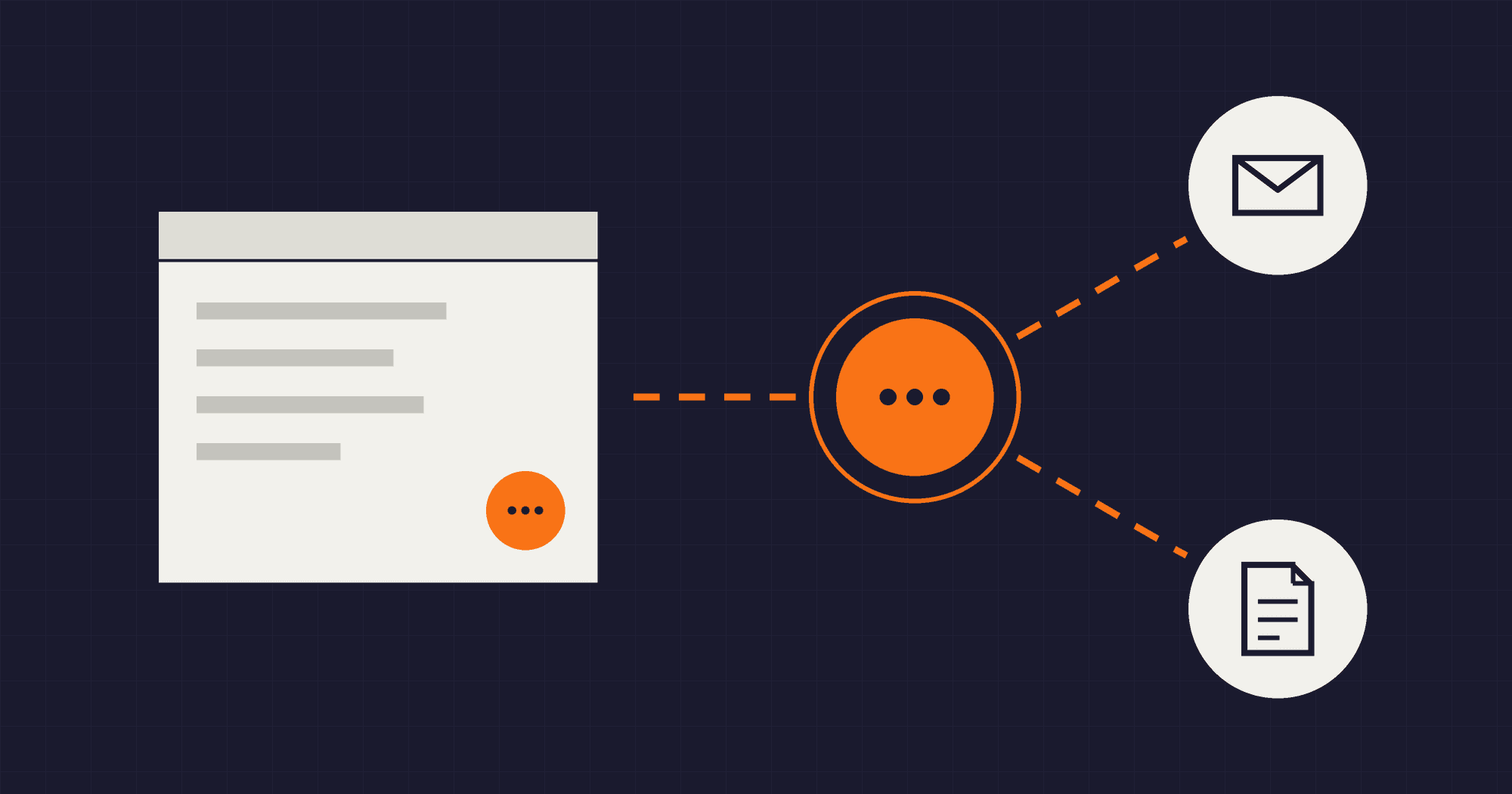
You hardly ever have to choose. The software remains the system of record and its AI is used for what it does well. The custom application handles the stretch that crosses systems or depends on your rules, and leaves the result in the software for a person to review.
Nor do you need to change software or migrate data: the application connects through whatever route the vendor offers, its API or an official connector. If your company has its own in-house software, you can also add AI to it without replacing it (in Spanish). And if you are not sure whether your ERP allows it, we summarise it in does AI integrate with my ERP? (in Spanish).
Five questions to decide
- Does the task start and end inside the software?
- Does it need information the software does not have, such as emails, outside documents, another system or your team's judgement?
- How many times a month is it done, and how much does a mistake cost?
- What does the vendor charge for its AI and for letting other systems in, today and at the next renewal?
- Where is the data processed, and can you check what the AI did in each case?
If you answer "yes" to the first and "no" to the second, start with the AI in your software. If the process crosses systems, depends on your rules or is repeated hundreds of times a month, custom development is worth considering.
What each route costs
The AI in your software is paid within the licence or as an add-on per user or by consumption, with no project. Its cost grows with the number of users and with usage.
Custom development is paid as a project plus a fee. At Tecnea, the proof of concept starts at €850, full development ranges from €5,000 to €20,000 and the monthly fee starts at €250 (what each amount includes, in Spanish). The proof of concept uses real documents from your company, so you know whether it pays off before investing more.
Frequently asked questions
Can my ERP's AI read the orders that arrive by email?
It depends on the software and the version. Some already read certain documents within their own module. What is usually left out is receiving the email, understanding orders in each customer's format and checking them against stock and terms before creating them. That is what an application connected to the ERP solves.
Do I have to change software to get custom development?
No. The custom application connects to the software you already use, which remains the system of record. Before starting, it is worth checking what access route the vendor offers and what it charges for it.
Can I start with the AI in my software and move to custom development later?
Yes, and it is usually the most sensible approach: you start with what you already pay for, measure where it falls short and commission only that part. The two coexist without any problem.
Who owns what is developed?
The custom code belongs to the client under the contract. Tecnea's own components on which it is built remain Tecnea's and are used within the service. We explain it in who owns the code of your AI application? (in Spanish).
If you want to know which part of your process is worth building and which part your software already solves, tell us what it is and which software you use.
This article is informational. Tecnea develops custom AI applications, so we have an interest in you choosing that route: that is why we start with when you do not need it. We do not name vendors or products because their assistants and their terms change with every version.
Sources
- SaaStr, "We Got a $240,000 Estimate for Agent API Access. Our Agent Suggested a $5 Postgres Instance." (3 October 2026): saastr.com
- SaaStr, article of 3 October 2026 on the meeting-booking tool they built with AI: saastr.com
- Tecnea, Connecting AI to your ERP or CRM: what the vendor may charge you and how to avoid surprises (29 September 2026).
Did you find this article useful?
We publish analysis on AI and technology for businesses. No spam: only when we write something worth reading.
You can unsubscribe from any email. Privacy policy
Did you like this article?
Tell us what you'd like to automate in your company and we'll tell you, with no strings attached, where to start.